










Green Dots: How to Best Use These Sights to Your Advantage
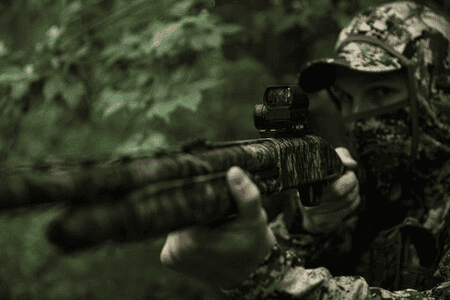
The human eye’s peak daylight sensitivity lands at 555 nanometers, according to Gigahertz-Optik’s light measurement reference, which draws on the CIE spectral luminous efficiency function, the international standard for measuring human visual response. That puts peak sensitivity squarely in the green range of the visible spectrum, and firearms optics engineers didn’t miss it. Green dot sights have steadily replaced red for a growing number of hunters and range shooters, and the reason is practical: your eye picks up green faster, with less fatigue and more clarity in bright conditions. Learning to use that to your advantage is what separates a green dot mounted on a gun from a green dot actually working for you.
What Makes Green Dots Different from Red
Red dots have held the top spot for decades. They’re proven and reliable. Green dot sights chip away at that lead in specific conditions. Sitting closer to the eye’s photopic peak, a green dot appears sharp and bright at lower power settings. The emitter works less hard to stay visible, pulling less current and generating less glare. That matters on a three-hour range day or a sit-all-morning turkey setup.
For shooters with astigmatism, green dots can be a significant improvement. Red dots are notorious for appearing as blurry blobs or starburst patterns through astigmatic eyes. Green dots scatter less across the retina at their wavelength, which means a cleaner, rounder dot in the sight picture. Shooters who’ve lived with a smeared red dot for years often describe switching to green as an immediate and obvious fix.
One real limitation: green disappears against green. In dense hardwoods or overgrown field edges, the dot can wash into the foliage behind your target. Knowing this going in keeps you from being caught off guard during a shot opportunity.
Zeroing Your Green Dot Right
A poorly zeroed sight at any price point is useless. Get to the range before the season, pick a known distance, and confirm your point of impact. The Dead Ringer RO Green Dot Scope is parallax-free at 30 yards, which puts it right in the zone for turkey hunting and close-range shotgun work.
Setting Brightness Before You Adjust
Run the brightness too high and the dot blooms over its own center. That makes your adjustments meaningless because you’re chasing a dot covering more real estate than it should. The rheostat dial on the RO Green Dot gives you fine control. Find the lowest setting where the dot stays crisp, then start your windage and elevation work. Once zeroed, walk your targets out to 20 and 50 yards and note any shift. Reflex sights can vary across distances, and knowing where yours prints helps you make clean calls in the field.
Best Use Cases for Green Dot Sights
Turkey Hunting
Ask turkey hunters why they run a green dot, and the answer usually comes back to speed. A gobbler steps into a lane, stops for two seconds, and that’s the window. There’s no time to align a traditional sight picture or fight an uncomfortable cheek weld. The unlimited eye relief on the Dead Ringer RO Green Dot Scope lets you get on target from any position, upright, sitting or wedged into a blind corner. The four illuminated reticle options give you flexibility to pick the one that reads best against the morning sky or a dark treeline.
Sport Shooting and Target Work
Speed and accuracy on the range pull in opposite directions until your equipment stops being the bottleneck. A green dot helps close that gap. The crisp reticle tracks through recoil better than a bloomed-out red dot, so you confirm your sight picture faster on a follow-up shot. Competitive shooters and anyone running timed drills will notice it quickly. By the back half of a long-range day, the eye strain reduction is real. You stay more accurate later in the session.
Small Caliber Rifles and Shotguns
The Dead Ringer RO Green Dot Scope is purpose-built for shotguns and small-caliber rifles. It mounts to Picatinny and Weaver rails with no adapter gymnastics, holds zero through heavy recoil loads, and carries a shock- and water-resistant build that handles field conditions without special treatment.
Setup Habits That Pay Off
Getting consistent results from a green dot is mostly about the habits you build before you ever pull the trigger in the field:
- Choose the right reticle. A simple dot works well for moderate-range precision. A circle-dot combination speeds up close-range acquisition. The RO Green Dot Scope gives you four options, so test them at the range before committing to one.
- Match brightness to conditions. Outdoors in full sun, you need more output to see the dot. Inside a blind or in overcast light, dial it back to keep the dot from blooming over your target.
- Mount it correctly. A canted mount is a miss you’ll spend all season troubleshooting. Level the sight, torque the rings to spec, and confirm zero after mounting.
- Practice transitions. Reflex sights reward shooters who train for fast acquisition. Dry-fire practice from a ready position builds the repetitions that pay off when a real shot opportunity appears.
Shop Dead Ringer Dot Sights
Dead Ringer’s lineup of firearm dot sights is built for hunters and shooters who need reliable gear, not inflated specs. The Dead Ringer RO Green Dot Scope packs a parallax-free design, four reticle modes, unlimited eye relief, and weather-resistant housing into a straightforward package that works. Browse the full Dead Ringer firearm lineup for sights and accessories built to perform. Visit deadringerhunting.com to shop.