








How to Improve Bow Accuracy at Longer Distances Without Guesswork
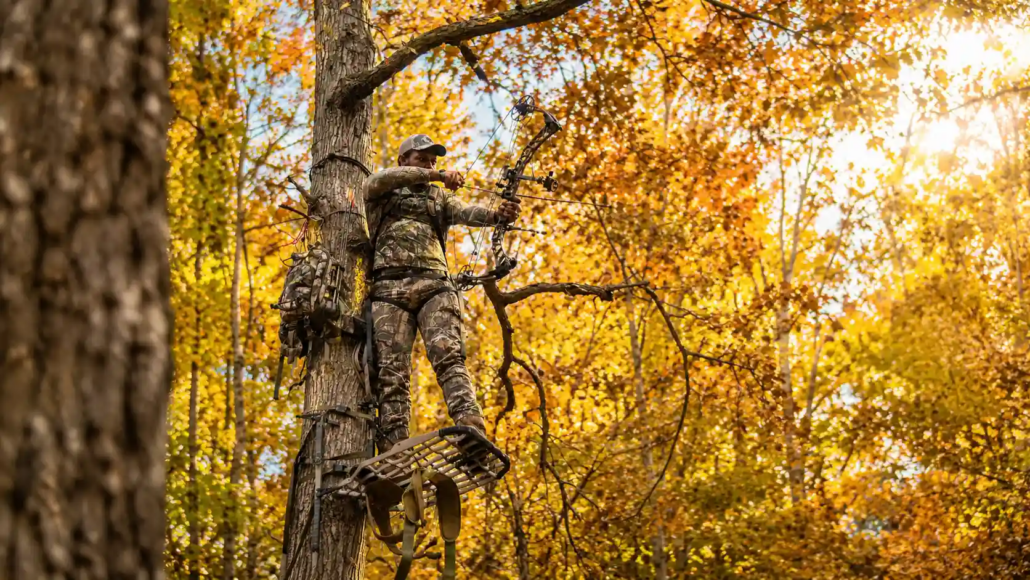
According to Vermont’s official bowhunter education course, the average hunter has a maximum effective range of about 30 yards, and most bowhunters shoot game from a much closer distance than that for good reason.
The course points to three specific problems that grow with distance: it gets harder to hit the vital area, an arrow can get deflected by brush nobody noticed, and the longer an arrow stays in the air, the more time an animal has to move before it arrives.
Bowhunters looking to improve bow accuracy long distance usually aren’t suddenly losing skill. Small mistakes that never mattered at 20 yards simply become impossible to ignore once the range stretches past 30 or 40.
Why Accuracy Changes So Much at Longer Distances
Arrow flight time increases with distance, and every extra fraction of a second in the air is another opportunity for something to go wrong.
Small form inconsistencies that get absorbed at close range turn into real misses further out, and pin movement that looked negligible at 20 yards looks alarming at 40, even when the actual instability hasn’t changed nearly as much as it appears to. Perceived instability and actual instability are two different problems, and confusing the two is usually the real starting point for a long-distance accuracy issue.
1. You’re Reacting to Pin Movement Instead of Trusting It
Pin float looks worse the farther out a target sits, simply because the pin’s motion covers more visual distance relative to the target. Overcorrecting for that movement, rather than trusting a controlled hold, is what turns a small wobble into an actual miss.
Some pin movement is normal at any distance. The mistake isn’t the movement itself; it’s how you react to it.
2. Your Sight System Limits Precision at Distance
Fixed pin gaps that work fine inside 30 yards get less forgiving as distance increases, and aiming between two pins for an in-between yardage introduces exactly the kind of guesswork this whole problem is about.
A sight built for fine, repeatable adjustment removes that guesswork rather than asking a hunter to split the difference by eye. The Wheel Bow Sight and the Quickdraw Bow Sight are both built around that kind of precision, rather than a fixed set of pins that only cover expected distances.
3. Minor Form Inconsistencies Are Amplified
Anchor point variation, inconsistent grip pressure, and a follow-through that breaks down are all things that get absorbed at 20 yards and become obvious at 40 or beyond. A slightly different anchor point shot to shot might shift group placement by an inch at close range, but that same inconsistency compounds into a much larger miss once distance stretches the error out.
None of these are new problems created by distance. Distance just removes the margin for error that used to hide them.
4. You’re Holding Too Long Before Releasing
Extra time at full draw means extra tension, and extra tension means more movement creeping into the shot. Hesitating past the point of a clean, natural release breaks the rhythm a shot depends on. A consistent shot cadence, drawing, settling, and releasing on a repeatable timeline, matters more the farther out the target is.
5. Your Arrows Are Not Optimized for Long-Range Consistency
Arrow weight and spine affect flight stability, and that effect compounds with distance rather than staying constant. A lighter or less consistent arrow drifts further off line the longer it stays airborne, since there’s simply more time for small imperfections to add up before it reaches the target.
Arrows built for consistent spine and stable flight hold their line better at extended range than a mismatched or inconsistent set will.
6. Environmental Factors Affect Your Shot More Than You Realize
Wind matters more at 40 yards than at 20, simply because it has more time to act on the arrow in flight. Shooting angle and elevation, common from a tree stand, change the actual point of impact in ways flat-range practice doesn’t prepare a hunter for, since gravity and arrow drop behave differently on a steep downward angle than on a level range.
Real hunting conditions, wind, angle, adrenaline, rarely match a calm afternoon on a flat range, and that gap is where a lot of long-distance misses actually come from. A crosswind that seems minor standing still can push an arrow noticeably off line by the time it covers 40 yards of open ground.
7. You’re Practicing Distance, Not Accuracy Patterns
Shooting farther without analyzing the results teaches very little. What matters is tracking where groups land and why, not just whether an arrow hit somewhere on the target. Recognizing a pattern, arrows consistently drifting left, or grouping low past 35 yards, is what actually leads to a fix.
Random shooting at distance without that analysis just repeats the same mistakes at a longer range.
8. Your Setup Isn’t Built for Precision at Distance
Entry-level setups have real limitations once distance stretches past the range they were designed for. Without fine-tuning capability built into the sight, arrows, and overall setup, consistency across those extended yardages becomes genuinely difficult to achieve, no matter how much the underlying technique improves.
Quick Checklist to Improve Long-Distance Bow Accuracy
Trust controlled pin movement instead of fighting it. Adjust the sight for precise aiming rather than splitting pin gaps by eye. Maintain a consistent anchor point and grip pressure on every shot.
Release with proper timing instead of holding too long. Use arrows built for stable, consistent flight. Practice under realistic field conditions, not just flat-range comfort. Track grouping patterns instead of guessing at what’s wrong.
What Gear Helps Improve Accuracy at Longer Distances?
Precision at distance comes down to equipment that supports fine aiming and consistent flight rather than fighting against the hunter’s technique. Adjustable sights built for precise aiming, like the Wheel Bow Sight and Quickdraw Bow Sight, remove the pin-gap guesswork covered above.
Stable, consistent arrow systems like Nutralyzer arrows round out a setup built for repeatability, not luck.
Why Hunters Trust Dead Ringer Gear for Long-Distance Accuracy
Dead Ringer is based out of Minden, Louisiana, and builds gear around real hunting conditions rather than range-only performance, with sights and arrows designed for precision and reliability shot after shot.
That consistency supports repeatable shot execution at distance, which is the foundation this piece has been building toward. Serious bowhunters who’ve moved past guesswork tend to gravitate toward gear built with that same standard in mind.
Stop Guessing Your Long-Distance Shots
If accuracy drops as distance increases, the setup is often the limiting factor, not the hunter. Precision-engineered sights and arrows built for consistent results close that gap when every yard counts.
Shop Bow Sights or shop arrows designed to deliver consistent results when every yard matters.