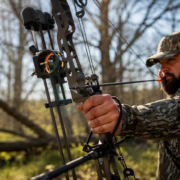









Your field points group tight. Your broadheads don’t. According to the National Deer Association, wounding rates for bowhunters using modern archery equipment run around 16 percent, based on radio-collar studies tracking what actually happens after the shot, compared to as high as 50 percent with traditional bows. Modern gear closes that gap, but it doesn’t close it to zero, and broadhead flight is one of the most correctable reasons it doesn’t.

Broadheads don’t create problems. They expose them. A setup with a small flaw can still shoot a decent field point group, because field points are forgiving. Broadheads aren’t, and that’s exactly why they’re useful.


What Broadhead Flight Problems Are Really Telling You

A broadhead has more surface area and less aerodynamic forgiveness than a field point, so it magnifies whatever small flaw already exists in your setup. That’s the real reason a bow that “feels fine” can still throw broadheads left, right, high, or low. Field point groups measure whether your bow can shoot straight in ideal conditions. 

Broadhead flight measures whether the whole system, bow, arrow, rest, and form, actually works together. Not whether it groups with field points, but whether it holds that group once a blade is on the front; that’s the same standard Dead Ringer’s pro staff holds a broadhead to before it earns a spot in their own kit.


How to Diagnose the Problem Based on Where Your Arrows Hit

Where your broadheads miss tells you where to look first. Consistent misses left often point to rest alignment or torque in your grip. Misses to the right usually trace back to a tuning imbalance or grip pressure changing at release. High or low misses point to nocking point height or timing between the arrow and the cams. 

Inconsistent, scattered grouping with no clear pattern usually means more than one variable is off at once, which makes isolating the fix harder but not impossible. If you’ve worked through all of the above and a specific head still won’t fly straight, a manufacturing defect is worth ruling out too, which is exactly what Dead Ringer’s lifetime warranty on broadheads exists to cover, not just tuning error on your end.


Your Bow Is Slightly Out of Tune Even If It Feels Fine

A bow can feel perfectly fine to shoot and still be slightly out of tune in ways that only show up once you switch to broadheads. Small tuning errors that a field point never reveals get magnified the moment you add blade surface area. 

“Good enough” tuning is a common trap, since a bow that groups field points fine can still be measurably off. A basic tuning kit like the Bone-A-Fide Archery Tuning Kit gives you the tools to check and correct the small stuff before it shows up as a miss in the field.


Arrow Spine and Setup Are Not Matched to Your Bow

Spine mismatch is one of the most common and least visible causes of broadhead flight problems. An arrow that’s too stiff or too weak for your draw weight and arrow length can fly acceptably with a field point and fall apart with a broadhead, since the extra surface area amplifies any inconsistency in how the shaft flexes coming off the string. Confirming spine against the actual bow, not just a generic chart, is the check Dead Ringer’s pro staff insist on before trusting any new arrow setup in the field.


Broadheads Are Not Properly Aligned

A broadhead that wobbles even slightly when spun on the shaft will fly differently than one that’s dead straight, and that wobble is often invisible until you actually check for it. Poor insert seating is a common, overlooked cause. Spin each arrow slowly by hand or on a simple spinner and watch the tip. 

Any visible wobble means something in that chain, insert, shaft, or broadhead isn’t seated straight. A broadhead that wobbles on the bench will wobble worse at fifty yards, which is why Dead Ringer’s pro staff checks every head for exactly this before it ships.


Your Shooting Form Changes Under Pressure

Broadheads reveal form flaws that field points quietly forgive. Extra torque from grip pressure, an inconsistent anchor point, or a slightly different release under pressure all show up more clearly once you’re shooting something with real surface area to catch that inconsistency. This is often the hardest cause to diagnose, since it’s not the equipment; it’s what changes about your shot the moment real stakes enter the picture. 

A lot of Dead Ringer’s pro staff carry that same understanding of pressure over from military service, which is part of why a veteran-owned company built its testing around how a shot actually holds up under stress, not just how it groups on a calm afternoon.


Your Rest and Center Shot Need Micro-Adjustment

Small rest adjustments can fix flight problems that look much bigger than they are. Center shot alignment, even off by a small fraction, compounds at distance in ways that are easy to underestimate. 

The mistake most hunters make here is overcorrecting, moving the rest too far in response to a miss and creating a new problem in the opposite direction. Dead Ringer’s own tuning kit is built around this exact discipline, matching a rest change to a measurable outcome instead of guessing at it.


Broadhead Design Affects Flight Behavior

Not all broadheads are equally forgiving of small setup flaws. Fixed-blade heads with less blade surface area generally fly closer to field points, while heavier mechanical designs can be more sensitive to the issues covered above. The Hyper Strike is built for speed and penetration with a design that stays forgiving on a slightly imperfect setup. At the same time, the Great White is engineered specifically for field-tip accuracy on fast vertical bows and crossbows, cutting on contact for a 1-inch entrance and 2.5-inch exit wound without sacrificing flight. 

The Butcher takes a simpler route entirely: a fixed two-blade design built, in Dead Ringer’s own words, for the perfect flight, which matters more than any other spec once everything else in your setup is already dialed in.


You’re Trying to Fix Everything at Once

Changing your rest, your arrows, and your form all in the same session makes it nearly impossible to know what actually fixed anything, or what made it worse. Isolating one variable at a time is slower, but it’s the only way actually to know what was wrong. It’s the same one-variable-at-a-time discipline Dead Ringer’s pro staff apply on their own test range in Minden, Louisiana, before any product earns a place in the lineup.


Quick Checklist to Get Broadheads Flying Straight

Confirm arrow straightness and alignment first, since a bent or misaligned component undermines every other fix you make afterward. Match your arrow spine to your actual draw weight and arrow length, not just a generic chart recommendation. Fine-tune your bow itself, not only your sight, since sight adjustments can mask a tuning problem instead of solving it. Check rest alignment and center shot with small, deliberate adjustments rather than large corrective swings. 

Keep your shooting form consistent across every test shot, since inconsistent form makes every other diagnosis unreliable. Test one adjustment at a time and shoot enough arrows to know the change actually mattered before moving to the next variable.


What Gear Helps Improve Broadhead Flight Consistency

Once you’ve isolated the actual problem, the right gear makes the fix stick. A tuning kit like the Bone-A-Fide Archery Tuning Kit gives you the tools to make and verify small adjustments rather than guessing. A broadhead built for consistent flight, rather than raw cutting diameter alone, removes one more variable from the equation before you ever draw back on an animal.


Why Hunters Trust Dead Ringer Broadheads for Consistent Flight

Dead Ringer has supplied archery gear to hunters since 2011, and every product is field-tested by more than 50 pro staff members who hunt the same conditions you do before it ever ships. 

That testing extends to the warranty behind it: Dead Ringer backs most of its products, broadheads included, with a limited lifetime warranty, well beyond the standard one-year coverage offered by some of the biggest names in the broadhead category. More than 500,000 hunters across North America have outfitted their setups with Dead Ringer gear built to fly consistently, not just cut well on paper.


Ready to Get Your Broadheads Flying Straight Again?

If your broadheads aren’t flying like your field points, the fix is almost always findable, and rarely a mystery once you isolate the right variable. Start with the diagnosis, fix one thing at a time, and back your setup with gear built by a team that hunts everything it sells, not just markets it. Shop broadheads built for consistent flight and stop guessing at what’s wrong with your setup.
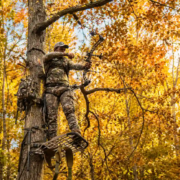
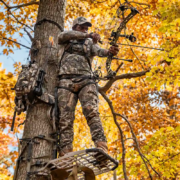
According to Vermont’s official bowhunter education course, the average hunter has a maximum effective range of about 30 yards, and most bowhunters shoot game from a much closer distance than that for good reason. 

The course points to three specific problems that grow with distance: it gets harder to hit the vital area, an arrow can get deflected by brush nobody noticed, and the longer an arrow stays in the air, the more time an animal has to move before it arrives. 

Bowhunters looking to improve bow accuracy long distance usually aren’t suddenly losing skill. Small mistakes that never mattered at 20 yards simply become impossible to ignore once the range stretches past 30 or 40.


Why Accuracy Changes So Much at Longer Distances

Arrow flight time increases with distance, and every extra fraction of a second in the air is another opportunity for something to go wrong. 

Small form inconsistencies that get absorbed at close range turn into real misses further out, and pin movement that looked negligible at 20 yards looks alarming at 40, even when the actual instability hasn’t changed nearly as much as it appears to. Perceived instability and actual instability are two different problems, and confusing the two is usually the real starting point for a long-distance accuracy issue.


1. You’re Reacting to Pin Movement Instead of Trusting It

Pin float looks worse the farther out a target sits, simply because the pin’s motion covers more visual distance relative to the target. Overcorrecting for that movement, rather than trusting a controlled hold, is what turns a small wobble into an actual miss. 

Some pin movement is normal at any distance. The mistake isn’t the movement itself; it’s how you react to it.


2. Your Sight System Limits Precision at Distance

Fixed pin gaps that work fine inside 30 yards get less forgiving as distance increases, and aiming between two pins for an in-between yardage introduces exactly the kind of guesswork this whole problem is about. 

A sight built for fine, repeatable adjustment removes that guesswork rather than asking a hunter to split the difference by eye. The Wheel Bow Sight and the Quickdraw Bow Sight are both built around that kind of precision, rather than a fixed set of pins that only cover expected distances.


3. Minor Form Inconsistencies Are Amplified

Anchor point variation, inconsistent grip pressure, and a follow-through that breaks down are all things that get absorbed at 20 yards and become obvious at 40 or beyond. A slightly different anchor point shot to shot might shift group placement by an inch at close range, but that same inconsistency compounds into a much larger miss once distance stretches the error out. 

None of these are new problems created by distance. Distance just removes the margin for error that used to hide them.


4. You’re Holding Too Long Before Releasing

Extra time at full draw means extra tension, and extra tension means more movement creeping into the shot. Hesitating past the point of a clean, natural release breaks the rhythm a shot depends on. A consistent shot cadence, drawing, settling, and releasing on a repeatable timeline, matters more the farther out the target is.


5. Your Arrows Are Not Optimized for Long-Range Consistency

Arrow weight and spine affect flight stability, and that effect compounds with distance rather than staying constant. A lighter or less consistent arrow drifts further off line the longer it stays airborne, since there’s simply more time for small imperfections to add up before it reaches the target. 

Arrows built for consistent spine and stable flight hold their line better at extended range than a mismatched or inconsistent set will.


6. Environmental Factors Affect Your Shot More Than You Realize

Wind matters more at 40 yards than at 20, simply because it has more time to act on the arrow in flight. Shooting angle and elevation, common from a tree stand, change the actual point of impact in ways flat-range practice doesn’t prepare a hunter for, since gravity and arrow drop behave differently on a steep downward angle than on a level range. 

Real hunting conditions, wind, angle, adrenaline, rarely match a calm afternoon on a flat range, and that gap is where a lot of long-distance misses actually come from. A crosswind that seems minor standing still can push an arrow noticeably off line by the time it covers 40 yards of open ground.


7. You’re Practicing Distance, Not Accuracy Patterns

Shooting farther without analyzing the results teaches very little. What matters is tracking where groups land and why, not just whether an arrow hit somewhere on the target. Recognizing a pattern, arrows consistently drifting left, or grouping low past 35 yards, is what actually leads to a fix. 

Random shooting at distance without that analysis just repeats the same mistakes at a longer range.


8. Your Setup Isn’t Built for Precision at Distance

Entry-level setups have real limitations once distance stretches past the range they were designed for. Without fine-tuning capability built into the sight, arrows, and overall setup, consistency across those extended yardages becomes genuinely difficult to achieve, no matter how much the underlying technique improves.


Quick Checklist to Improve Long-Distance Bow Accuracy

Trust controlled pin movement instead of fighting it. Adjust the sight for precise aiming rather than splitting pin gaps by eye. Maintain a consistent anchor point and grip pressure on every shot. 

Release with proper timing instead of holding too long. Use arrows built for stable, consistent flight. Practice under realistic field conditions, not just flat-range comfort. Track grouping patterns instead of guessing at what’s wrong.


What Gear Helps Improve Accuracy at Longer Distances?

Precision at distance comes down to equipment that supports fine aiming and consistent flight rather than fighting against the hunter’s technique. Adjustable sights built for precise aiming, like the Wheel Bow Sight and Quickdraw Bow Sight, remove the pin-gap guesswork covered above. 

Stable, consistent arrow systems like Nutralyzer arrows round out a setup built for repeatability, not luck.


Why Hunters Trust Dead Ringer Gear for Long-Distance Accuracy

Dead Ringer is based out of Minden, Louisiana, and builds gear around real hunting conditions rather than range-only performance, with sights and arrows designed for precision and reliability shot after shot. 

That consistency supports repeatable shot execution at distance, which is the foundation this piece has been building toward. Serious bowhunters who’ve moved past guesswork tend to gravitate toward gear built with that same standard in mind.


Stop Guessing Your Long-Distance Shots

If accuracy drops as distance increases, the setup is often the limiting factor, not the hunter. Precision-engineered sights and arrows built for consistent results close that gap when every yard counts.

Shop Bow Sights or shop arrows designed to deliver consistent results when every yard matters.

You settle in behind a decoy spread or lean against a tree line, the moment arrives, and the shot feels right up until it isn’t. A turkey hangs up at 38 yards. A duck crosses faster than expected. Neither scenario is really about how well you can shoot. It’s about whether your equipment gave you an honest read on the shot in the first place. 

Finding the right shotgun sights for turkey and duck hunting often comes down to something smaller than choke or load: where your sight actually puts your eye on the target, and whether that reference point holds up as distance grows.

Why a Standard Bead Sight Falls Short at Distance

A single bead works fine at close range, but as distance grows, the margin for error shrinks fast. According to the Oregon Department of Fish and Wildlife’s guidance on sighting in and patterning a shotgun, a turkey load is only considered effective at 40 yards if at least 18 of the roughly 100 pellets in the pattern strike the head and neck zone specifically, not just the general target area. 

Miss that mark and the load has effectively exceeded its usable range at that distance, no matter how tight the pattern looks on paper.

That’s the real argument for a dedicated sight system. As the vital zone becomes proportionally smaller relative to the pattern at a distance, a fixed bead gives you no way to confirm exactly where the pattern is centered. A dedicated, adjustable sight does.

What Actually Matters in a Turkey Shotgun Sight?

Turkey hunting is closer to precision aiming than instinctive wingshooting. The bird is stationary, but the vital zone is small and the shot often happens at the edge of your load’s effective range. A sight built for turkey hunting needs a clear reference point that scales to distance, not just a bright dot to center on the bird’s whole body. 

The Dead Ringer Beard Buster addresses this directly: when the turkey’s head and neck fit inside the sight’s orange ring, the bird is roughly 30 to 35 yards out, giving a hunter a built-in distance check instead of a guess.

What Actually Matters in a Waterfowl Shotgun Sight?

Ducks flip the problem. Instead of a stationary target with a small vital zone, you’re tracking a fast-moving bird where lead and swing matter as much as aim. A waterfowl sight needs to support quick target acquisition without slowing down your swing through the shot. 

The Dead Ringer Duck Buster is built around a micro-adjustable ghost ring rear sight paired with a high-visibility front sight, so windage and elevation can be fine-tuned for the specific ranges and conditions you’re shooting in, rather than relying on a single fixed reference point.

One Sight or Two Seasons?

Hunters who work both turkey and waterfowl seasons face a real choice: run separate dedicated sights, or find one setup that adapts. The Dead Ringer Killer Combo is built for exactly that situation. 

It uses interchangeable rear apertures, the same Duck Buster and Beard Buster references found in the standalone sights, on one shared front sight system, so a single shotgun can move between seasons without buying and installing two completely separate sight setups.

Do You Need to Change Sights Between Seasons?

For most hunters, the more important question isn’t whether to switch sights. It’s whether the same shotgun and choke combination genuinely serves both seasons in the first place. Turkey loads pattern tightly through a full or extra-full choke, while duck loads typically need a more open constriction to avoid a spread that’s too narrow on a moving target. 

If your gun already handles that shift well, swapping a rear aperture takes seconds and no tools. If it doesn’t, the sight was never the hard part of the equation; the choke-and-load pairing deserves the same attention.

Signs Your Current Sight Setup Is Costing You Shots

Not every miss means it’s time for a new sight, but a few patterns are worth paying attention to. If your point of impact shifts noticeably between range days without any change in load or choke, the issue may be in how consistently you’re mounting the gun, not in the sight itself. 

If you consistently lose track of a bird against dark timber, overcast skies, or low morning light, a high-visibility front sight solves a real problem rather than adding an unnecessary upgrade. And if you find yourself estimating distance during the shot rather than confirming it against a fixed reference, that’s the clearest sign that your current setup is asking you to guess at exactly the moment you can least afford to.

Installing and Sighting In Your New Sight

Any of these sights still needs to be paired with actual patterning, not installed and trusted blindly. Mount the sight following the manufacturer’s screw specifications for your shotgun model, then pattern your load at the distances you actually hunt, not just one fixed range. 

Adjust windage and elevation based on where the pattern centers relative to your aim point, and repeat the process any time you change loads or chokes. A precise sight only helps if it’s confirmed for your specific gun-and-ammunition combination.

It’s also worth re-checking your zero at the start of each season, not just right after installation. Storage, transport, and even minor bumps during travel can shift a sight’s position slightly, and a few minutes on the range before opening day is far cheaper than discovering mid-hunt that your point of impact has moved.

Dead Ringer Equips Hunters Nationwide with Precision Shotgun Sights

Dead Ringer is a veteran-owned brand within the Rock Ridge Outdoors family, built for hunters who need gear that performs when the shot actually matters. We design our shotgun sights around the real difference between turkey and waterfowl hunting, not a one-size-fits-all approach, so hunters nationwide can find a sight built for the season they’re actually in.

Whether you’re closing the distance on a hung-up gobbler or tracking a fast-crossing duck, the right sight turns a guess into a confirmed shot.

Ready to Improve Your Shot Placement This Season

Precision starts with knowing exactly where your pattern is centered, not hoping it lines up. The right sight setup takes that guesswork out of the equation for both turkey and waterfowl hunting.

Explore the Beard Buster for turkey season, the Duck Buster for waterfowl, or the Killer Combo if your shotgun works both seasons.

A bow is only as good as the setup around it. You can shoot the most expensive rig on the rack, but if your pins are wrong, your bow torques in your hand, or your arrows fly loose, you will not put them where you are aiming when it counts. The right archery accessories are what turn a decent bow into a deadly, repeatable system, and they are the difference between a clean harvest and a long night of second-guessing.

There is real science behind why this matters. A peer-reviewed study published in the journal Sports found that steadier aim and less bow movement are directly tied to better shooting accuracy, with the most accurate shooters showing the least wobble while holding at full draw. 

That is exactly what good gear does for you. It steadies the bow, calms the shot, and removes the small errors that cost you. Here are the accessories every bowhunter should own to build a setup that performs.

Start With a Quality Bow Sight

If you only upgrade one thing, make it your sight. Your sight is the single accessory most responsible for where your arrow lands, and a quality one pays for itself the first time a buck steps out at an odd yardage.

A good sight gives you bright, durable pins that hold zero through a season of bumps and weather, plus the adjustability to dial in each distance precisely. Cheap sights drift, dim out at last light, and crack when they take a hit. When you are choosing from bow hunting sights, match the pin count and size to how you hunt: fewer, thicker pins for close timber and low light, more and finer pins if you stretch your range. The point is to see your aiming reference clearly and trust it shot after shot.

Add a Stabilizer to Steady Your Shot

That study’s finding that less bow movement leads to better accuracy is the whole job of a stabilizer. By adding balanced weight forward of the grip, a stabilizer fights the wobble and torque that pull your pin off target right as you release.

The result is a steadier sight picture, a quieter shot, and tighter groups, especially at longer distances where small movements get magnified. A stabilizer will not fix bad form, but it will refine and reinforce good form, which is what you want from your gear. 

Look at a hunting bow stabilizer sized for your style, shorter and lighter for mobile hunting, longer for maximum steadiness from a stand or blind. It is one of the simplest upgrades that makes an immediate, felt difference.

Do Not Overlook Your Arrow Rest and Peep

Your sight and stabilizer get the attention, but the rest and peep quietly decide whether your setup is consistent. A solid arrow rest supports the arrow cleanly and releases it the same way every shot, while a properly installed peep sight forces the same anchor and sight alignment every time you draw.

Consistency is the entire game in bowhunting. If your anchor wanders or your arrow leaves the rest differently each time, no sight on earth will save you. These smaller components are where repeatable accuracy is built, and they are easy to take for granted until a flyer reminds you they matter.

Carry the Right Release and Quiver

How you trigger the shot and how you carry your arrows both feed back into accuracy. A quality release gives you a clean, predictable break instead of the punch-and-flinch that throws arrows wide, and matching your release to your shooting style keeps your anchor and follow-through consistent.

Your quiver matters more than most hunters think, too. A solid, well-mounted quiver keeps your arrows secure and quiet on the walk-in, and it should attach without throwing off the balance you worked to dial in with your stabilizer. Loose, rattling arrows cost you both shots and spooked game.

Keep the Small Stuff That Keeps You Shooting

The accessories that round out your kit are not glamorous, but they keep you in the field and on target. A few quality additions cover the gaps that otherwise end a hunt early.

  • A compact field repair and tuning kit earns its place fast, because a loose sight screw, a rotated peep, or a rest that drifts out of alignment can quietly wreck your accuracy in the middle of a hunt, and carrying the few tools needed to true things up on the spot means a small, fixable problem never turns into a wasted day in the stand.
  • String wax belongs in every pack because a dry, frayed string shoots inconsistently and wears out far faster than a maintained one, and since your string is what launches every single arrow, spending a few seconds keeping it conditioned protects both your shot-to-shot accuracy and the considerable money you have already invested in your bow, arrows, and the rest of your setup.
  • A durable bow case or sling protects your dialed-in setup in transit, because all the tuning and sighting work in the world means nothing if your sight gets knocked out of zero, rattling around a truck bed or banging against the stand on the climb up, and keeping everything protected on the way in is how your gear actually arrives ready to perform.

You can find these and the rest of the essentials among our archery accessories, built to keep your setup honest from the truck to the moment of truth.

Why Bowhunters Trust Dead Ringer for an Accurate Setup

Dead Ringer is a veteran-owned brand run by people who care about the same thing you do: gear that does its job when a real shot presents itself. From our home base in Minden, Louisiana, we design and ship bow sights, stabilizers, broadheads, and the full range of archery accessories to hunters across the country, all backed by a limited lifetime warranty. 

Every product shares the same focus on accuracy and durability, because we know your setup has to hold zero through tough conditions and perform when it matters most.

Frequently Asked Questions

What archery accessories does a beginner actually need?

Start with the essentials that drive accuracy: a reliable bow sight, an arrow rest, and a peep sight, plus a quiver to carry arrows safely. From there, a stabilizer and a quality release round out a setup that shoots consistently. You do not need everything at once, but those core pieces matter from your very first shots.

Do stabilizers really make a difference for hunting?

For most hunters, yes, though how much depends on your setup and shot distances. A lighter bow and longer shots benefit the most, while a heavy rig taken only inside close range sees less dramatic gains. If you hunt from a stand or blind where weight is not a concern, a stabilizer is an easy win. If you cover serious ground on foot, size it so the steadiness is worth the ounces you carry.

How often should I replace or maintain my archery accessories?

Check your gear before every season and after any hard knocks or travel. Wax your string regularly, confirm your sight and rest are tight and zeroed, and inspect your peep and release for wear. Most accessories last for years with basic care, but a quick pre-hunt check keeps small issues from costing you a shot.

Will better accessories actually improve my accuracy?

Quality accessories improve consistency, and consistency is what produces accuracy. A bright sight you can trust, a steady stabilizer, a clean release, and a repeatable anchor all take guesswork out of the shot. Gear cannot replace practice, but the right setup lets your practice show up when a real shot presents itself.

Build a Setup That Performs When It Counts

The best bowhunters are not necessarily the strongest or the most talented. They are the ones whose gear does exactly what they expect, every single time, because they built their setup around accuracy and consistency instead of leaving it to chance. Every accessory here pulls in the same direction: a steadier hold, a cleaner shot, and an arrow that goes where you aim.

Level up your setup with precision-tested gear that keeps every shot consistent. Whether you are tuning a new bow or upgrading what you already have, shop archery accessories now built by hunters for hunters.

Dead Ringer® is purely focused on making products to help the hunter and archer succeed, Dead Ringer® has always been an industry-standard.