









Shotgun Sights for Turkey and Duck Hunting: Enhance Your Shooting
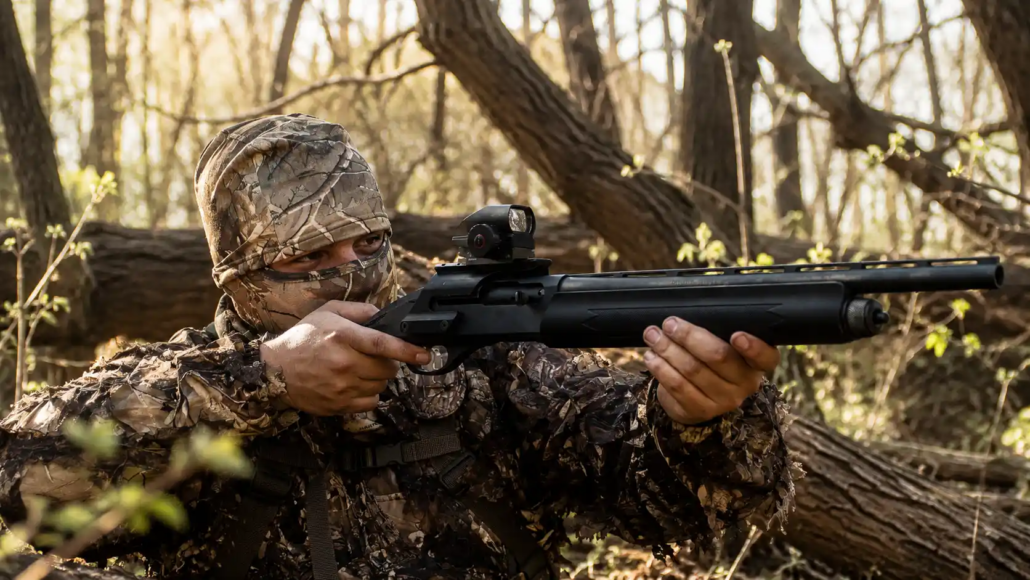
You settle in behind a decoy spread or lean against a tree line, the moment arrives, and the shot feels right up until it isn’t. A turkey hangs up at 38 yards. A duck crosses faster than expected. Neither scenario is really about how well you can shoot. It’s about whether your equipment gave you an honest read on the shot in the first place.
Finding the right shotgun sights for turkey and duck hunting often comes down to something smaller than choke or load: where your sight actually puts your eye on the target, and whether that reference point holds up as distance grows.
Why a Standard Bead Sight Falls Short at Distance
A single bead works fine at close range, but as distance grows, the margin for error shrinks fast. According to the Oregon Department of Fish and Wildlife’s guidance on sighting in and patterning a shotgun, a turkey load is only considered effective at 40 yards if at least 18 of the roughly 100 pellets in the pattern strike the head and neck zone specifically, not just the general target area.
Miss that mark and the load has effectively exceeded its usable range at that distance, no matter how tight the pattern looks on paper.
That’s the real argument for a dedicated sight system. As the vital zone becomes proportionally smaller relative to the pattern at a distance, a fixed bead gives you no way to confirm exactly where the pattern is centered. A dedicated, adjustable sight does.
What Actually Matters in a Turkey Shotgun Sight?
Turkey hunting is closer to precision aiming than instinctive wingshooting. The bird is stationary, but the vital zone is small and the shot often happens at the edge of your load’s effective range. A sight built for turkey hunting needs a clear reference point that scales to distance, not just a bright dot to center on the bird’s whole body.
The Dead Ringer Beard Buster addresses this directly: when the turkey’s head and neck fit inside the sight’s orange ring, the bird is roughly 30 to 35 yards out, giving a hunter a built-in distance check instead of a guess.
What Actually Matters in a Waterfowl Shotgun Sight?
Ducks flip the problem. Instead of a stationary target with a small vital zone, you’re tracking a fast-moving bird where lead and swing matter as much as aim. A waterfowl sight needs to support quick target acquisition without slowing down your swing through the shot.
The Dead Ringer Duck Buster is built around a micro-adjustable ghost ring rear sight paired with a high-visibility front sight, so windage and elevation can be fine-tuned for the specific ranges and conditions you’re shooting in, rather than relying on a single fixed reference point.
One Sight or Two Seasons?
Hunters who work both turkey and waterfowl seasons face a real choice: run separate dedicated sights, or find one setup that adapts. The Dead Ringer Killer Combo is built for exactly that situation.
It uses interchangeable rear apertures, the same Duck Buster and Beard Buster references found in the standalone sights, on one shared front sight system, so a single shotgun can move between seasons without buying and installing two completely separate sight setups.
Do You Need to Change Sights Between Seasons?
For most hunters, the more important question isn’t whether to switch sights. It’s whether the same shotgun and choke combination genuinely serves both seasons in the first place. Turkey loads pattern tightly through a full or extra-full choke, while duck loads typically need a more open constriction to avoid a spread that’s too narrow on a moving target.
If your gun already handles that shift well, swapping a rear aperture takes seconds and no tools. If it doesn’t, the sight was never the hard part of the equation; the choke-and-load pairing deserves the same attention.
Signs Your Current Sight Setup Is Costing You Shots
Not every miss means it’s time for a new sight, but a few patterns are worth paying attention to. If your point of impact shifts noticeably between range days without any change in load or choke, the issue may be in how consistently you’re mounting the gun, not in the sight itself.
If you consistently lose track of a bird against dark timber, overcast skies, or low morning light, a high-visibility front sight solves a real problem rather than adding an unnecessary upgrade. And if you find yourself estimating distance during the shot rather than confirming it against a fixed reference, that’s the clearest sign that your current setup is asking you to guess at exactly the moment you can least afford to.
Installing and Sighting In Your New Sight
Any of these sights still needs to be paired with actual patterning, not installed and trusted blindly. Mount the sight following the manufacturer’s screw specifications for your shotgun model, then pattern your load at the distances you actually hunt, not just one fixed range.
Adjust windage and elevation based on where the pattern centers relative to your aim point, and repeat the process any time you change loads or chokes. A precise sight only helps if it’s confirmed for your specific gun-and-ammunition combination.
It’s also worth re-checking your zero at the start of each season, not just right after installation. Storage, transport, and even minor bumps during travel can shift a sight’s position slightly, and a few minutes on the range before opening day is far cheaper than discovering mid-hunt that your point of impact has moved.
Dead Ringer Equips Hunters Nationwide with Precision Shotgun Sights
Dead Ringer is a veteran-owned brand within the Rock Ridge Outdoors family, built for hunters who need gear that performs when the shot actually matters. We design our shotgun sights around the real difference between turkey and waterfowl hunting, not a one-size-fits-all approach, so hunters nationwide can find a sight built for the season they’re actually in.
Whether you’re closing the distance on a hung-up gobbler or tracking a fast-crossing duck, the right sight turns a guess into a confirmed shot.
Ready to Improve Your Shot Placement This Season
Precision starts with knowing exactly where your pattern is centered, not hoping it lines up. The right sight setup takes that guesswork out of the equation for both turkey and waterfowl hunting.
Explore the Beard Buster for turkey season, the Duck Buster for waterfowl, or the Killer Combo if your shotgun works both seasons.